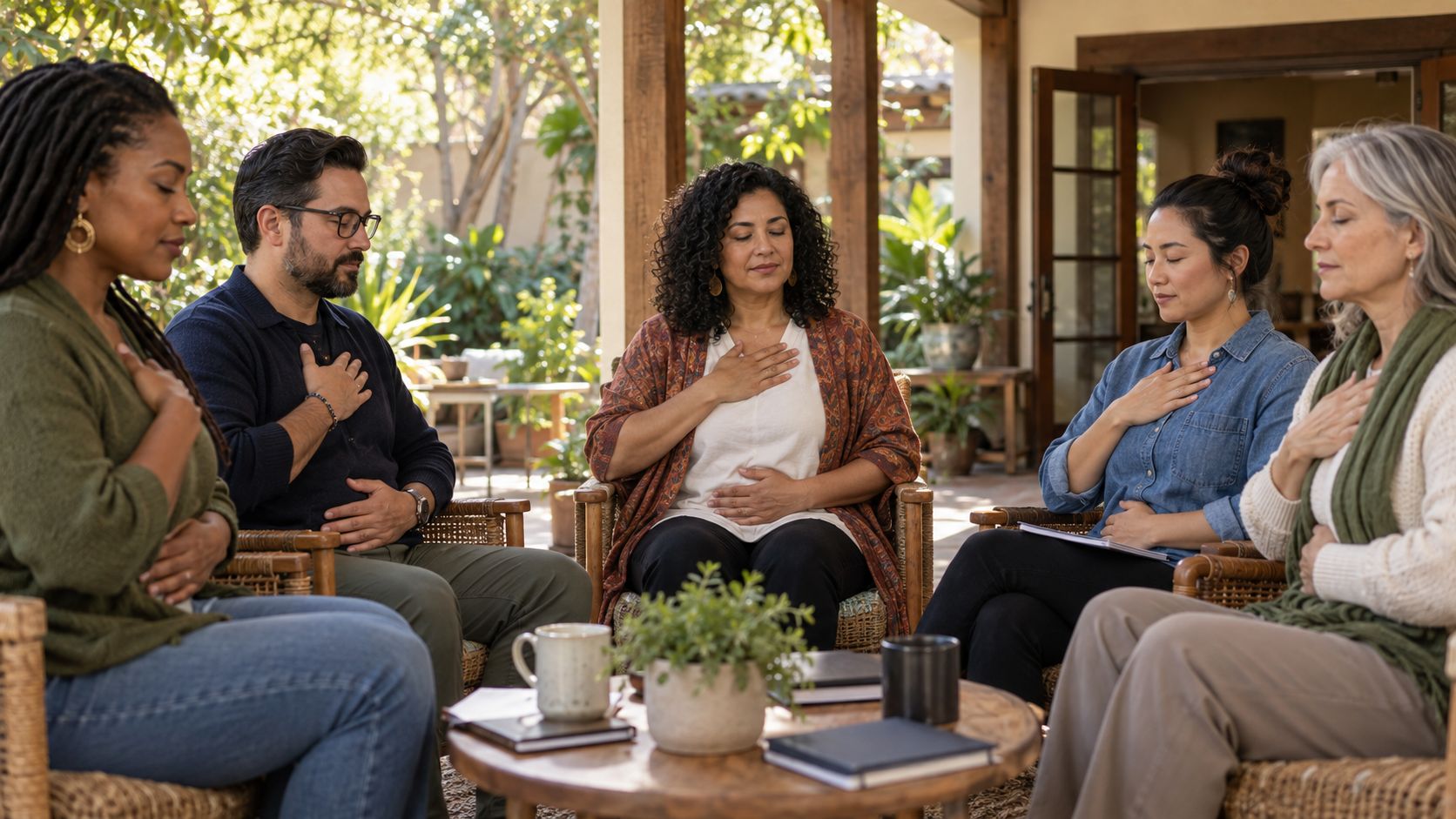
Holding space: Supporting clients and ourselves through collective trauma
Thursday, January 29, 2026 · 12:00 PM UTC · 90 min

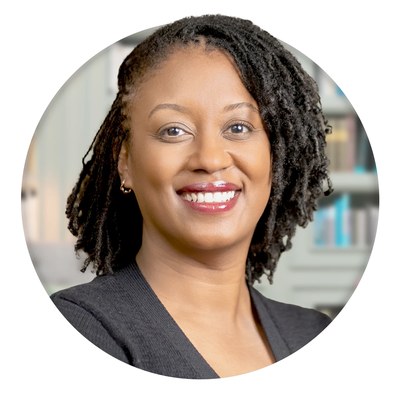


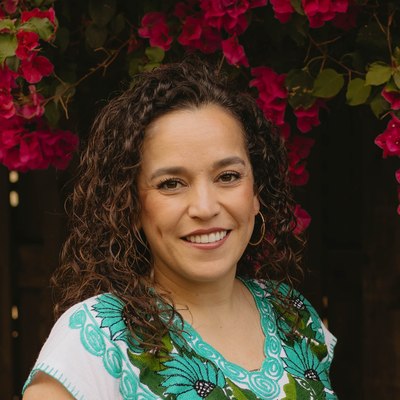
Yajaira Curiel, Lashauna Cutts, Jenn Hourani, Carla Smith, Morgan Stinson
About this webinar
When a whole community is living under sustained threat, the clinician is often inside that community too, and the usual separation between the person holding the space and the people in it does not hold. This closing session of a three-part series brings the clinical model together into practice: collective trauma as a shared condition, somatic and grounding work for use in therapy and in supervision, and a durable plan for sustaining the work.
Most trauma training assumes a clinician standing outside the event looking in. Collective trauma takes that assumption away. When a whole community is living under sustained enforcement threat, the clinician often belongs to that community, shares its exposure, and carries the same uncertainty into the room. The usual separation between the person holding the space and the people in it stops holding, and clinical judgment, boundaries, and sustainability are all affected by that.
This session closes a three-part series and brings its model together into practice. The earlier sessions established the stress-safety cycle and the sequencing that puts safety ahead of intervention. This one examines what changed in participants' clinical work and where the gaps remain. A multi-clinician panel format is used on purpose, because practitioners working in the same conditions reach different conclusions, and watching experienced clinicians work through a genuine disagreement teaches more than a consensus presentation.
The clinical content centers on what shared exposure does to the therapeutic frame. Participants look at how to stay useful to a client whose fear you also carry, how to tell whether your own activation is clinical information or interference, and where the line sits between appropriate self-disclosure and handing your distress to the client. Research on collective care as a framework for trauma-exposed helping professionals indicates that structures distributing emotional labor across a group outperform individual resilience strategies (West et al., 2021), and the session applies that finding to supervision specifically.
Practical content includes somatic check-in practices you can use at the start of a clinical session or a supervision hour, the six-domain client safety planning framework carried forward from the preceding session, and a practical toolkit covering trauma-informed care for clinicians supporting immigrant families, with supervision tools and structured reflection exercises. Practice guidance from the National Child Traumatic Stress Network (2019) and SAMHSA (2020) runs throughout.
The session also introduces an ongoing peer consultation structure, with small-group consultation and emotional support sessions led by licensed bilingual supervisors across the following six months, on the understanding that a single training event will not sustain work of this kind.
Participants will leave able to describe collective trauma as a shared clinical condition and what it does to the therapeutic frame, to apply somatic and grounding practice in clinical and supervisory settings, and with an individual plan for sustaining the work.
This session is appropriate for licensed and pre-licensed clinicians and clinical supervisors serving communities affected by immigration enforcement or other sustained collective threat. Attendance at the earlier sessions is helpful and not required. Content level: intermediate.
Speakers
Yajaira Curiel
PhD, LMFT
Yajaira S. Curiel, PhD, LMFT, is a licensed marriage and family therapist in California in good standing, practising in Pasadena with seventeen years of clinical experience. Dr. Curiel earned a PhD in Couple and Family Therapy from Drexel University, a master's in Marriage and Family Therapy from Syracuse University, and a bachelor's degree in child and family development from San Diego State University. The practice is bilingual and bicultural and centers on BIPOC communities, with particular attention to couples navigating life cycle transitions and to families with young children, grounded in culturally responsive, social-justice-informed care. Dr. Curiel also trains therapists in training, and doctoral research examined the experience of manhood among first-generation, college-educated Mexican-American men.
Lashauna Cutts
LCSW
Lashauna Cutts, LCSW, is a licensed clinical social worker with nearly 20 years of experience in trauma treatment. She spent more than a decade at the VA treating PTSD and supervising clinicians, served on the psychiatry faculty at the Yale School of Medicine, and later served as Senior Clinical Director at Nema Health, a national telehealth program for PTSD, where she continues as a Clinical Advisor. She now runs her own practice, Cutts Clinical Trauma Solutions, is a certified provider of Cognitive Processing Therapy (CPT), Prolonged Exposure (PE), and Cognitive Behavioral Conjoint Therapy for PTSD (CBCT-PTSD), and has extensive training in Cognitive Behavioral Therapy (CBT) and Dialectical Behavior Therapy (DBT). She holds an MSW from Smith College.
Jenn Hourani
LMFT, CLC
Jenn Hourani, LMFT, CLC, is a licensed marriage and family therapist in California, licence #158060 and in good standing, and a certified life coach whose practice blends Narrative therapy, Internal Family Systems, and Somatic Experiencing. She holds postgraduate certification in the somatic and parts-based modalities she teaches. As a proud child of Lebanese immigrants, she has been fascinated by culture, memory, and landscapes from a young age. After working in higher education and then in the technology industry, she became a therapist in the years following the pandemic and now works largely with millennial and Gen Z adults navigating burnout, anxiety, and questions of identity. She also runs Somatics for Non-Somatic Therapists, a virtual training group teaching clinicians body-based tools they can bring into their own sessions. She considers herself a lifelong student, perpetually inspired by nature, ancestors, and the wisdom of the body.
Carla Smith
PhD, LCSW, LMFT
Carla Smith, PhD, LCSW, LMFT, is the Chief Clinical Officer at Motivo, where she leads clinical quality, compliance, and the standards governing supervision and continuing education across the platform. She is licensed as a clinical social worker and as a marriage and family therapist in Georgia, Maryland, Virginia, and the District of Columbia, all in good standing, and is the founder of Haven Therapy and Wellness. Before joining Motivo, Dr. Smith spent eight years at Mercer University School of Medicine as Assistant Program Director and Assistant Professor, overseeing clinical training for master's students in the Marriage and Family Therapy program. She holds a PhD in Human Development and Family Science with a specialization in Marriage and Family Therapy and an MSW in clinical social work, both from the University of Georgia. Her research and teaching center on clinical supervision, cultural humility, and therapist development.
Morgan Stinson
PhD, LMFT, CCTP
Morgan Stinson, PhD, LMFT, CCTP, is a licensed marriage and family therapist in Georgia, licence #MFT001518 and in good standing, and a Certified Clinical Trauma Professional. Stinson serves as Director of Behavioral Health Services and Integration at Community Health Care Systems, a federally qualified health center network serving rural and underserved communities in Georgia, which is the practice context this session addresses. Before moving into that role, Stinson spent several years as an Assistant Professor at Mercer University School of Medicine, teaching in the Marriage and Family Therapy program. Stinson holds a PhD from the University of Georgia and an MS from East Carolina University, and has presented nationally on the integration of behavioral health services in school-based settings.
Continuing education details
Format and interactivity
Interactive synchronous distance learning, delivered live on Zoom. Presenters are on camera. Attendees stay muted and off camera and take part through chat, Q&A, polling, and reactions.
System requirements
A computer, tablet, or phone with a broadband internet connection, speakers or headphones, and the Zoom app or a supported web browser. Your Zoom link is emailed after you register.
Accessibility and accommodations
Live captions are available in every session. To request accommodations, email learn@motivohealth.com before the session.
Grievances and refunds
Concerns and refund requests are handled under the Motivo Learning grievance policy.
References
The bibliography for this webinar is in the one-pager download.
Continuing education
1.5 CE credits were offered to live attendees.
Association of Social Work Boards (ASWB)
Motivo, #1829, is approved as an ACE provider to offer social work continuing education by the Association of Social Work Boards (ASWB) Approved Continuing Education (ACE) program. Regulatory boards are the final authority on courses accepted for continuing education credit. ACE provider approval period: 10/25/2023 – 10/25/2026. Social workers completing this course receive 1.5 cultural competence continuing education credits.
National Board of Certified Counselors (NBCC)
 Motivo
ACEP No. 7222
Motivo has been approved by NBCC as an Approved Continuing Education Provider, ACEP No. 7222. Programs that do not qualify for NBCC credit are clearly identified. Motivo is solely responsible for all aspects of the programs.
Explore more from Motivo
We solve
clinical supervision